

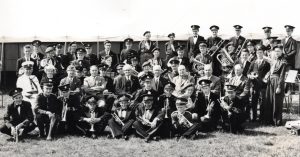
 The 1959 Course
By Tony Mansell
‘Once a Bandsman, always a Bandsman’ is an oft-spoken phrase meaning that being a part of a brass band stays with a person for life, even after they stop playing.
In these more enlightened times, the phrase would no doubt be more inclusive but up until the 1940s, banding was essentially a male preserve and I can recall one long-standing colleague espousing that the bandroom was “no place for a maid.” What a sad state we would be in if that view held firm.
Despite that inaccuracy, the phrase is as true now as it was when it was first uttered. It describes the lifelong pride, deep friendship, and strong love of music that remains long after we have played our last note. There remains a bond born of a unique sense of team spirit and players recall their time spent in making music as an enduring part of who they are.
For me, the sound of a brass band will always excite; it has a special magic, evocative: a part of my Cornish heritage and it conjures memories of all those years when I was a Cornish bandsman.
There I go again, drifting off into a mood of nostalgic laden memories but that was not my intention when I first put pen to paper or finger to keyboard. That’s the way it gets you I’m afraid, when you have the tea shirt or perhaps the anorak!
So then, what is the purpose of this unapologetically sentimental missive?
It is certainly about memories – my memories of being a part of a great movement which has played a huge part in my life from the age of nine. A movement which provided me with opportunities to make music with wonderful people and to play under such motivational conductors as I laboured and then grew as a member of the Cornwall Youth Brass Band.
The list of great names who led us will sound like a who’s who of the brass band world, each one with their own style and personality. I am reluctant to talk of favourites so I have done the decent thing and arranged them in chronological order through my years as a member – from 1959 to 1968. Later years, I will leave to others.
The band’s history actually began in 1954 and our Musical Director at St Agnes, Frank Moore, was there in its early days when it was heavily under the influence of Fred Roberts of Camborne. My impression was that it was producing good music but that it was not attracting sufficient players.
In 1958, the Cornwall Music Advisor, Mr W Pearson, invited Dr Denis Wright, to a meeting at the Red Lion in Truro to discuss how to give the band added impetus. Denis Wright had formed the National Youth Brass Band of Great Britain and his ideas would surely help. This discussion led to the restructuring of the organisation and, importantly, the invitation to all young Cornish brass players to join a vibrant youth band offering an annual residential course. Fred Roberts seems to have left at this time but Frank Moore was certainly still there and he was to become an important figure as the band moved into the second phase of its life. it was placed under the umbrella of the Cornwall Brass Band Association and either at the meeting, or shortly after, Cecil Brewer, Edgar Floyd and Eddie Williams also came on board as tutors.
This new beginning included the residue from the 1954 band and a raft of new recruits selected by audition. The changes provided the catalyst and the new committee members returned to their respective bands to enlist all willing and able candidates.
My memory is that six prospective members of St Agnes Silver Band headed off to the auditions (David Bunney was already a member) and I recall the trepidation of having to play in front of a panel of tutors. Unfortunately, I pitched a wrong note and within a nano-second, Frank Moore issued a loud rebuke. Later, a harsh publicly made comment of, “You only just made it,” added to my embarrassment. However, I would be the first to accept that my enthusiasm for the world of brass was not great at that time and the humiliation was considerably greater than my euphoria at being accepted. Not so my parents who were as proud as punch that I was to join my elder brother as a member of this august body – the Cornwall County Youth Brass Band (CCYBB).
1959
The first residential course was at Easter 1959 and the ‘59ers’ found themselves involved in regular pre-course rehearsals. The list of players and the choice of music for this, and for subsequent years, is in the band’s entry in the Cornish National Music Archive (CNMA). https://cornishnationalmusicarchive.co.uk/content/cornwall-youth-brass-band-part-1-1955-to-1980/
One name in this year was trombonist Godfrey Richards (Goff) whose subsequent musical career included writing hundreds of compositions for brass band and other genres.
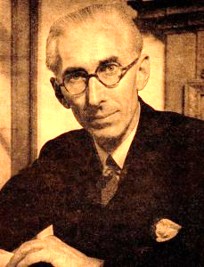 Dr Denis Wright
Dr Denis Wright was a prominent British composer and conductor. He was to become a major influence in the re-formed band and his appointment to lead the first course was a considerable coup for the fledgling committee.
The 1959 course was the only one held under canvas – in a field just above Porthpean Beach – and I later discovered that Denis Wright was quite disparaging that it was held in the open air rather than inside. He considered that camping was not conducive to making good music. My memory, however, was of it being great fun especially as much of our free time was spent on the beach.
Unfortunately, I still remember his stern face and slightly tetchy reaction when I made a couple of errors in rehearsals. I had lost my spectacles in the sea and reading the music was difficult. That excuse has stood me in good stead for years so I’m not about to change it now!
The resident tutors were Edgar Floyd, W D Lawton, Frank Moore, Alwyn Teasdale and Eddie Willliams and the programme did not include any piece which could be described as ‘testing’. However, the choices seemed entirely appropriate for this young band. By the end of the week, Denis Wright had ‘licked us into shape,’ and ‘we played our hearts out’ at a successful drumhead service and concert in Poltair Recreation Ground.
The course was enjoyable both from a musical experience and as a social event with many long-lasting friendships made.
1960
Denis Wright was the course director again in 1960 but on this occasion the organisers had heeded his words and the chosen venue was St Austell Grammar School where we played, ate and slept. It was not as much fun as camping but we made the best of it and managed to occupy our free time with games in the playground. I often wonder if the football was ever recovered from the roof of the Brewery next door.
In this year, the resident tutors were Cecil Brewer, J Coombes, Edgar Floyd, Frank Moore, W G Speare and Eddie Willliams and the programme appears to have been a little more ambitious. The drumhead service and concert took place again but this time on the school playing field.
1961
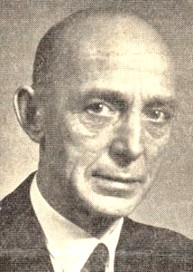 T J Powell
Thomas James Powell led the 1961 course which again was at St Austell Grammar School. Did he manage to engender a more relaxed atmosphere or is that just my memory? TJ, as he was popularly known in the band world, was a former Salvation Army player, Musical Director with the Royal Marines and with the Melingriffith Works Band.
He was a composer and wrote numerous marches earning him the nickname, ‘The Welsh Sousa’. His favourite, ‘Castell Coch,’ was in the programme as was the first public performance of his arrangement of the Welsh hymn ‘Blaenwern,’ arranged especially for the Band.
The resident tutors were Cecil Brewer, S Coombes, Edgar Floyd, Frank Moore, W G Speare and Eddie Willliams.
1962
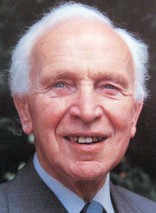 Eric Ball
The 1962 course was led by that brass band doyen, Eric Ball. He was a composer and conductor and “one of the most prolific writers and influential figures in the brass band world.” What a pleasure and what an experience for these young players who would be able to say that they had played under this great man. This was the first of his four consecutive courses and I really think the band progressed greatly under his leadership and influence.
The resident tutors were Cecil Brewer, Edgar Floyd, Frank Moore, W G Speare and Eddie Willliams and the programme included some really enjoyable music.
This year saw me move from tenor horn to first baritone and it signalled a complete change in my attitude. I took to the instrument and the part it played in the band and my enthusiasm increased immeasurably. I have a sneaking feeling that Frank Moore recognised this but of course, he wouldn’t say so. For the past year or so I had been ‘pretending’ I was a French Horn in the Cornwall Symphony Orchestra but giving that up was a small price to pay to take this new seat.
1963
In 1963, Eric Ball was there again but the location had changed to Fowey School where the resident tutors were Cecil Brewer, Ken Eglin, Edgar Floyd, Frank Moore and Eddie Willliams.
This was an excellent venue and our presence there was due to Frank Moore’s peripatetic brass band involvement there and the enthusiasm of its headmaster, Ken Eglin, who had become one of the CYBB’s tutors.
1964
In 1964, maybe slightly earlier, the word ‘County’ was dropped from the band’s name. Whether this was to satisfy those who insist that Cornwall is not a county or whether it was because the word was considerd superfluous, I don’t know, but it was now to be known as the Cornwall Youth Brass Band (CYBB).
Reflecting our location, and the leadership of Eric Ball, the programme included the first public performance of his ‘Fowey River Suite’. The inspiration for this piece of music is obvious from its title but the fact that it was intentionally or unintentionally engineered may not be appreciated. In his article for the CNMA, Phillip Hunt wrote: “One afternoon Reg Trudgian [CYBB Official] took Eric and his wife, Olive, for a drive down the valley of the River Fowey – along the banks to the mouth of the river. Eric Ball was so inspired by the beauty of the scenery that by the next course he had composed The ‘Fowey River Suite,’ which he dedicated to the Cornwall Youth Brass Band, who gave its first performance under his baton. We played it from manuscript and it comprised five movements. Later, when the music was published, Eric Ball had reduced it to only four due to time constraints apparently imposed by the publishers. No doubt the band still has the original unique manuscript with all five movements, not heard since that first performance.”
Fowey School now felt like home to us, a place where we could shut ourselves off from the outside world and concentrate on simply making music. The resident tutors were as 1963 plus one additional name, Hugh Camps.
1965
In 1965, Eric Ball completed his run of four consecutive courses – his ‘super hat trick’ according to Google – and whilst a change is often healthy, there were many who were sad that his run had ended and that his gentle guiding influence would no longer be in our midst. However, he did return in 1969 but by that time I had ‘retired’.
The resident tutors were Cecil Brewer, Hugh Camps, Ken Eglin, Edgar Floyd and Frank Moore and it is an understatement to say that they did their job well. Once again, the music programme was well-chosen and the band performed well.
1966
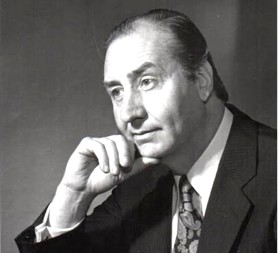
Having completed his run of four courses, Eric Ball gave way to the charismatic and popular Geoffrey Brand who led the 1966 course. Initially a trumpet player with the Royal Philharmonic, he grew to love the sound of a brass band and led the famous Black Dyke Mills to wins in the National Championships, the British Open Championships and the World Championship. He was more than 20 years younger than his predecessors and although many years older than us youngsters, he achieved a greater rapport than those who had gone before. He joined us in our free time, chatted with us, and even demonstrated his great playing ability.
The ever-faithful Cecil Brewer, Hugh Camps, Ken Eglin, Edgar Floyd and Frank Moore were still there as our resident tutors and we were still ensconced in our favourite venue, Fowey School.
A group of youngsters ‘camping’ together will always use their free time to good purpose and there were many amusing situations which on paper may now seem mundane but at the time were hilarious. One such was of us being awakened (as if we were asleep!) by the school bell. It caused great amusement for us and frustration for the tutors. The miscreant hid behind the stage curtain and then jumped out of a first-floor window believing he was on the ground floor. Nice one Reuben. Another memory was of raiding the school tuck shop for which a feeling of guilt still hangs over me.
 Geoffrey Brand
1967
Geoffrey Brand returned to lead the 1967 course when the programme included Beethoven’s ‘Fidelio’ overture and Dvorak’s ‘From the New World Symphony’. It also featured the first public performance of the ‘Little Suite (No 2) for Brass Band’ written by Malcolm Arnold and dedicated to the band. He conducted it and later wrote, “The Concert was a great experience which I shall never forget. Every player excelled themselves and made me realise what a wonderful thing music is.”
It was in this year that the programme included a piece where it was necessary to create the sound of a whiplash. The instrument was fashioned in the carpentry workshop and comprised two pieces of wood, hinged together. Unfortunately the design did not include handles and the muffled sound of the whiplash was quickly followed by a loud howl of pain.
The resident tutors for this year were Cecil Brewer, Hugh Camps, Ken Eglin, Edgar Floyd and Frank Moore and they, together with Geoffrey Brand and Malcolm Arnold, made our music-making enjoyable and inspired us to deliver an impressive performance.
1968
 Malcolm Arnold
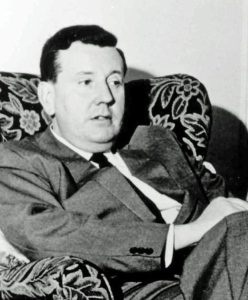
In 1968, Malcolm Arnold led the course and I have to say that it was one of the most enjoyable musical experiences of my life. I was, by then, over the leaving age but I am so grateful that a shortage of baritone players led to my invitation to take part “for just one more year.”
Sir Malcolm Henry Arnold (1921-2006) was a professional orchestral trumpet player, composer and conductor. His works include nine symphonies, concertos, choral music and music for brass band. He wrote for the theatre, for the worlds of ballet and opera and was in great demand by the film industry. His music for the film, ‘The Bridge on the River Kwai,’ earned him an Oscar.
We were all aware of his reputation as a heavy drinker and as a bit of a rebel but perhaps that only added to his appeal to this impressionable group of youngsters. We practised hard and laughed a lot and I recall one incident in a bout of particularly energetic conducting during rehearsals when his belt gave way. He grabbed his trousers and continued unperturbed. Unimpressed by our fits of giggles he reminded us that we should have continued playing. As someone later commented, “He was jovial, but always serious about the music.”
In one of my later articles I wrote: “In particular, I remember Malcolm Arnold with affection, pride and respect. Initially a trumpet player with the BBC Symphony Orchestra, he went on to become a conductor and composer of international repute. He was a large man, both physically and in character; a genial extrovert, whose presence would light up any room.”
I admired his attempts to persuade the sometimes-pompous music world that the vision of the flat cap brass bandsmen was long past; that the movement had evolved and now deserved to take its place amongst the world’s great music makers.
He provided us youngsters with an experience of a lifetime and, from what he wrote, the feeling was mutual. He chastised a certain well-known BBC presenter for making light of our achievements and said that we had given him more enjoyment than he had given us. He also reflected that the greatest value of such courses was in forging lasting friendships, a comment more appreciated now than at the time.
Cecil Brewer, Hugh Camps, Ken Eglin, Edgar Floyd and Frank Moore were the resident tutors this year and it was their dedication, and that of the other helpers, throughout the life of the band, that has been the prime reason for its success. Perhaps, at the time, we didn’t fully realise what a huge contribution these people were making; their time was given freely for our enjoyment and for the future of the Cornish brass band movement. I salute them all.
Playing in the CYBB was just a part of my playing career but what a huge part it was. I still recall the moments of sadness as the concert concluded and we all rolled up our sleeping bags and headed off to our homes. Gathered together for long days with the sole aim of making music engenders a particular camaraderie but whereas the leaving was tough, there was always next year. Not so for me in 1968 and I left with the realisation that I had experienced a special time in my life, the memories of which would stay with me for the rest of my days.
Further Reading:
Malcolm Arnold: https://cornishnationalmusicarchive.co.uk/content/malcolm-arnold-an-article-by-phillip-hunt/
Malcolm Arnold: https://cornishnationalmusicarchive.co.uk/content/malcolm-arnold-a-tribute-by-tony-mansell/
Malcolm Arnold: https://cornishnationalmusicarchive.co.uk/content/cornish-brass-band-composers-sir-malcolm-arnold/
Eric Ball in Cornwall: https://cornishnationalmusicarchive.co.uk/content/eric-ball-in-cornwall-an-article-by-phillip-hunt/
Hugh Camps: https://cornishnationalmusicarchive.co.uk/content/hugh-camps/
Edgar Floyd: https://cornishnationalmusicarchive.co.uk/content/edgar-floyd/
Frank Moore: https://cornishnationalmusicarchive.co.uk/content/frank-moore/
Eddie Williams: https://cornishnationalmusicarchive.co.uk/content/eddie-williams/
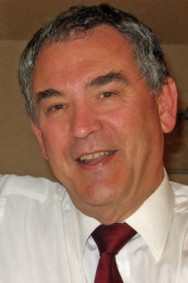
Tony Mansell is a Cornish historian with a diverse interest in Cornwall’s past and present. He is a Cornish Bard (Skrifer Istori), a researcher with the Cornish National Music Archive and Co-editor of Cornish Story.